
Malaysian Lemongrass and Ginger Curry
‘A sneaky pre-dishing-up spoonful had me happily hopping round the kitchen. It’s bright, zingy, creamy and just all-round gorgeous. We loved it. Thank you!’
Molly R, Kendal; Food Customer
Table of Contents
- ✨ Before We Begin…
- The Cook’s Mind
- A Note on Origin
- Ingredient Focus: Lemongrass
- My Favourite Way To Eat
- Multi-Purpose Recipe
- Why You’ll Love This Recipe
- What Will You Learn Whilst Making This Recipe?
- Handpicked to Go With This One
- Waste Less: How To Use Up Your Ingredient Stash!
- Malaysian Lemongrass and Ginger Curry Recipe
✨ Before We Begin…
Fragrant, light, and quietly complex, this curry brings the warmth of ginger and the citrus lift of lemongrass together in a broth that soothes as it brightens. It’s the kind of dish that builds flavour without heaviness – one to simmer gently while the evening settles in. Served over rice or with flatbread, it’s a gentle kind of bold, full of plant-based goodness and deep comfort. One for the repeat list.
‘Must be best food offer, of any genre, in Kendal. Hugely accomplished cooking and very much recommended.’
Tony P, Kendal; Food Customer
The Cook’s Mind
Curries like this are where I feel most at home in the kitchen – bold flavours, plenty of layering, and that moment when the spices lift and bloom in the pan. This one teaches you to use aromatics like lemongrass and ginger properly – not just as background notes, but as the lead instruments. It’s about building warmth, not just heat, and letting every element hold its own in the sauce. I don’t make this kind of dish tentatively – and once you’ve cooked it, you won’t either.
Make-Ahead
Prepare the curry paste or broth a day or two ahead. Once you’ve added your vegetables or tofu, it’s best served fresh or within 24 hours. The aromatic base benefits from a night in the fridge.
Freezer-Friendly
- Freeze the broth or sauce separately.
- Add cooked vegetables or tofu fresh for better texture.
- Defrost overnight and reheat gently.
Key Substitution Ideas
- Galangal can replace ginger for a deeper spice.
- Tempeh or edamame can swap in for tofu.
- Use coconut cream for richness or dilute coconut milk for a lighter finish.
A Note on Origin
This curry draws from the bright, bold kitchens of Malaysia, where lemongrass, ginger, and spices weave into rich, fragrant broths. Influenced by Malay, Chinese, and Indian culinary traditions, Malaysian curries often balance heat, sweetness, and aromatics in a way that feels both lively and deeply grounded. Our version leans into that spirit — vibrant with fresh herbs, layered with warmth, and rooted in the beautiful, diverse traditions of Southeast Asian home cooking.
Ingredient Focus: Lemongrass
Fresh lemongrass brings a clean citrus lift that makes the whole dish feel sharper, brighter, and more complete. When buying it fresh, look for stalks that are firm, pale at the base, and slightly fragrant when scratched – avoid anything dry, rubbery or overly green at the top. To use, trim the tough outer layers and bash the stalk with the back of your knife to release its oils. A good curry doesn’t hide its lemongrass – it sings with it. I have found that good quality lemongrass is not available in my area, and that’s why I use a readymade purée. It’s not ideal but it’s better than using the dry stale lemongrass that’s available where I live.
✨ A bright thread running through the heart of a dish.
My Favourite Way To Eat
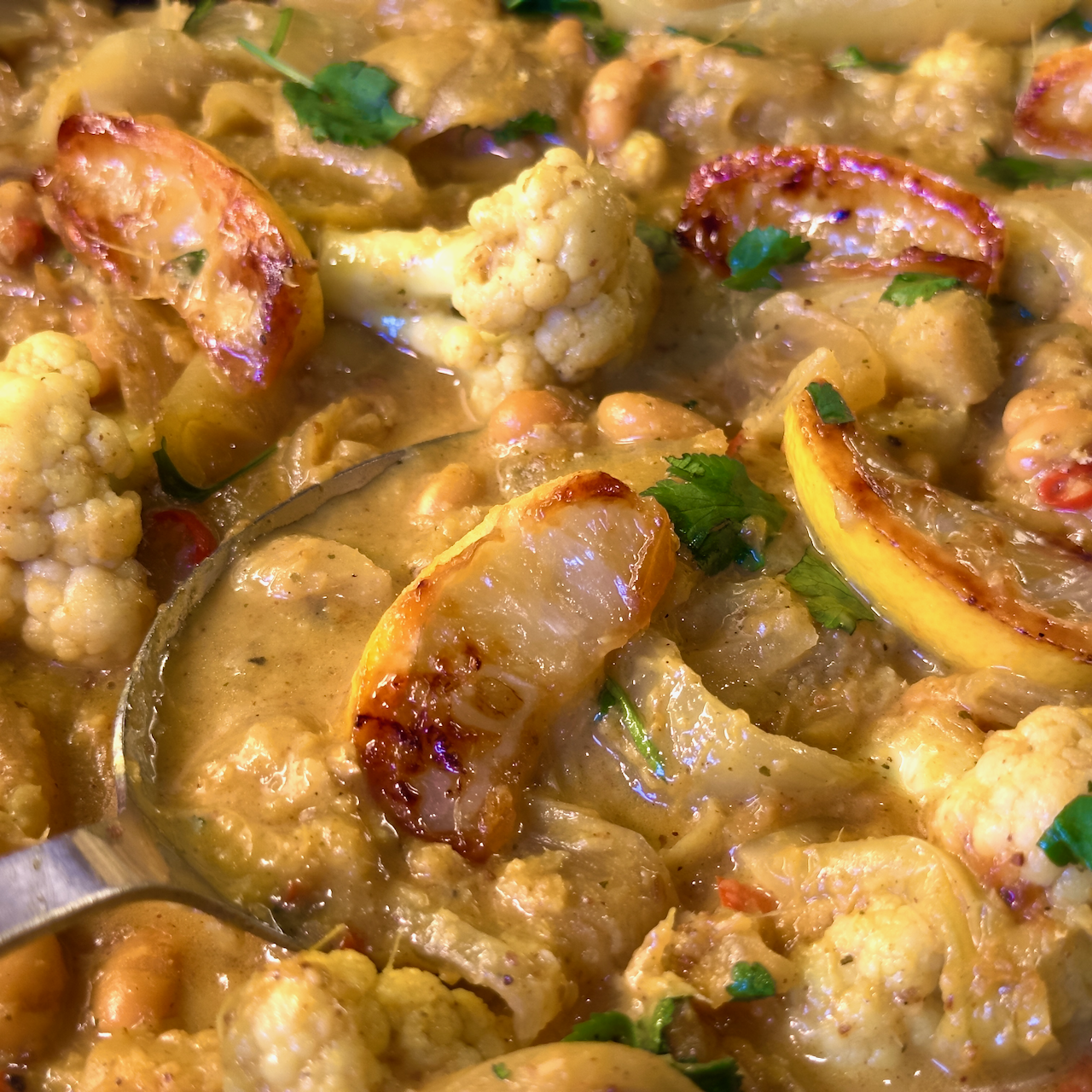
Served on white rice, with cauliflower and cannellini beans or chickpeas. I’d want that squeeze of fresh lemon and lemon zest for sure.
Multi-Purpose Recipe
This recipe has more than one life… Bright, fragrant, and flexible. Pair with rice, noodles, roti, or even spooned over baked potatoes. The curry base becomes a broth, a marinade, or a braise – wherever you need warmth and lift, it fits.
Why You’ll Love This Recipe
- It’s fragrant and full-bodied – without being overly spicy or heavy
- It balances citrus, creaminess, and heat beautifully
- It uses store cupboard staples with a few fresh stars
- It’s versatile – serve it with rice, flatbreads, or over noodles
- It’s a showstopper without the stress – the kind of curry people ask you for again
What Will You Learn Whilst Making This Recipe?
- How to prepare and release flavour from fresh lemongrass and ginger
- How to build an aromatic curry base using whole and ground spices
- How to balance heat, creaminess and acidity in a Southeast Asian-style sauce
- How to keep vegetables vibrant and well-textured in a curry
- How to use layering and timing to bring real depth to plant-based curries
Handpicked to Go With This One
A few recipes that play well together — flavour friends, not just neighbours.
Waste Less: How To Use Up Your Ingredient Stash!
Got something spare – a handful, a spoonful, or the end of a packet? These tags help you find other ways to use it. It’s a small step toward cooking intuitively and wasting less❣️
brown onion, cauliflower, coconut milk, curry powder, fresh coriander, fresh ginger, fresh herbs, ground cinnamon, lemon, lemon juice, lemongrass, red chilli, soft light brown sugar, stock cube, turmeric
Malaysian Lemongrass and Ginger Curry Recipe
Malaysian Lemongrass and Ginger Curry
Aromatic curry powder and ginger are cooked gently with onion petals, lemongrass and coconut milk to create a fragrant, layered base. Chickpeas and cauliflower bring bite and comfort in equal measure. Finished with a generous squeeze of lemon, it’s bright, warming, and quietly bold.
Ingredients
Ginger purée
- 160 g ginger | fresh; unpeeled weight
- 75 ml water
Other ingredients
- 2 unit red chilli | mild and fat
- 500 g brown onion | unpeeled weight
- 2 tbsp rapeseed oil
- ½ tbsp curry powder
- 35 g soft light brown sugar
- 2 pinches salt
- 2 tsp lemongrass purée
- 15 g stock cube | use gluten-free if required
- 37 ml lemon juice
- 2 pinches ground cinnamon | measure in 1/16 tsp
- ¼ tsp turmeric
- ¼ tsp salt
- 400 ml coconut milk
- 240 g chickpeas | cooked weight
- 200 g cauliflower | chopped into small, bite-sized florets
Ingredients for serving
- 5 g fresh coriander | chopped and sprinkled over the top
- 1 unit lemon | cut into wedges
Instructions
Prepare the ginger purée
- Peel the ginger, roughly chop into smallish chunks and place into the food processer. Add the water. Switch on and let the processor blend the ginger for around 8 minutes. Keep opening the blender and use a spatula to push the ginger from the sides. Leave it for as long as you can. I add the water to help this process and it is cooked off later.160 g ginger, 75 ml water
Make the curry
- Peel the onions and chop into petals that are approximately 1.5cm wide (at the widest point). Slit the red chillis lengthways, scrape out the seeds and finely slice.500 g brown onion, 2 unit red chilli
- Add the oil to the large frying pan, and add a low heat. Allow the oil and the pan to heat up.2 tbsp rapeseed oil
- Add the curry powder to the warmed oil and stir around. Wait until you can smell the curry powder before adding the ginger purée.½ tbsp curry powder
- Add the ginger purée and mix with the fragrant curry powder. Mix and stir, allowed the water from the purée to evaporate. Watch the ginger slowly become a darker colour.
- When the ginger/spice mix is thicker and more fragrant, add the sugar to the centre of the pan, and stir it around – little circles to big circles – with the spoon to incorporate it with the ginger/spice mix . Listen! You will hear the sound of the mix in the pan change when the sugar is in… it starts to sound a bit 'crispier', like something is happening. It makes a lot of sense to cook this mix really well. Go slow on the heat if you need to.35 g soft light brown sugar
- Add the onion petals and red chill slithers and salt, and mix everything thoroughly. Proceed to cook the onion petals with the red chilli slithers until they are softened and becoming translucent.2 pinches salt
- Add the lemongrass purée and stir to mix.2 tsp lemongrass purée
- Crumble the stock cubes into the centre of the pan, add the lemon juice over the stock cubes, and mix and cook. Add the cinnamon and turmeric, and mix.15 g stock cube, 37 ml lemon juice, 2 pinches ground cinnamon, ¼ tsp turmeric
- Add the coconut milk, mix and stir together, and simmer on a low heat for around 15 minutes, until the sauce has reduced, thickened and changed colour (become a darker colour). The amount of time you need here depends on so many factors: temperature in the room, ventilation, windows open or closed, draughts, exact heat under the pan… Just watch for it becoming thicker and do the spoon test: the sauce will coat the back of a spoon. You'll know when it's right. Taste it. Perhaps add the 1/4 tsp salt. Personally, I think it needed just a little more salt but you must taste it yourself and make your own decision.400 ml coconut milk, ¼ tsp salt
- Towards the end of cooking, steam the cauliflower for a few minutes. Meantime, add the chickpeas to the sauce and warm through. Finally, add the steamed cauliflower and stir.240 g chickpeas, 200 g cauliflower
- Serve topped with fresh coriander and a lemon wedge on the side.5 g fresh coriander, 1 unit lemon
Video
Nutrition
Calories: 448kcalCarbohydrates: 42gProtein: 9gFat: 30gSaturated Fat: 19gPolyunsaturated Fat: 6gMonounsaturated Fat: 2gSodium: 1019mgPotassium: 735mgFiber: 8gSugar: 18gVitamin A: 115IUVitamin C: 40mgCalcium: 100mgIron: 5mg
Nutritional values are estimates only and will vary depending on specific ingredients used. Nutrition is per serving. Information is for the main recipe, not optional accompaniments.
COPYRIGHT
© The Golden Polar Bear, 2026. Recipe and photography by Julia Savory. If you share it, please link back to thegoldenpolarbear.com.
Next Steps?
You’ve got the full recipe — now take it further. Inside Black Labrador, you’ll find structured video courses and an ever-growing cookbook designed to help you cook with understanding, not guesswork. Learn, revisit, and deepen your skills at your own pace.
‘Totally recommend the cookery course. The meals are really tasty and full of flavour (not like most of the vegan mush I make for myself).’
Kerry B, Cumbria
Absolutely love the lemongrass in this – it really comes though and adds a “zing to the dish.