Saffron Skies and Cinnamon Nights: A Moroccan Tagine
Drawn from Moroccan kitchens – where saffron sunsets and spice-laden nights weave their magic.
Table of Contents
- ✨ Before We Begin…
- The Cook’s Mind
- A Note on Origin
- Ingredient Focus: Za’atar
- My Favourite Way to Eat
- Multi-Purpose Recipe
- Why You’ll Love This Recipe
- What Will You Learn Whilst Making This Recipe?
- Handpicked to Go With This One
- Waste Less: How To Use Up Your Ingredient Stash!
- Saffron Skies and Cinnamon Nights: A Moroccan Tagine Recipe
✨ Before We Begin…
There’s something about a tagine that invites you to slow down. It doesn’t shout – it simmers. This one brings together soft apricots and dates, warming spices like cinnamon and harissa, and a generous pinch of sumac and za’atar to brighten and round things out. The result is rich, layered, and gently sweet – not in a cloying way, but in a way that feels grounding and generous.
This is a dish you can make in advance, let deepen overnight, and serve with something simple like couscous or warm flatbread. It’s deeply plant-based, but satisfying in the way only slow-cooked dishes can be – tender vegetables, thick sauce, and all those little flecks of spice that catch on the tongue. A recipe for evenings when time slows and comfort matters.
‘Must be best food offer, of any genre, in Kendal. Hugely accomplished cooking and very much recommended.’
Tony P, Kendal; Food Customer
The Cook’s Mind
This dish teaches the art of layering – not just ingredients, but intention. You’ll build from the base up toasting saffron first, then adding warmth, sweetness, and a touch of heat in stages, allowing each flavour to find its place. It’s about trust too – in the ingredients, in the oven cook, and in the knowledge that food doesn’t need to shout to be unforgettable.
Make-Ahead
Tagine flavours deepen beautifully overnight. You can prepare the whole dish a day or two in advance and reheat gently, covered, until warmed through. Add fresh herbs and lemon zest just before serving for brightness.
Freezer-Friendly
- Freeze the cooked tagine in portions. Please be aware that it will be a little soggier if it’s been frozen. The fruit especially.
- Defrost slowly and reheat on the hob with a splash of water to loosen.
- Couscous or fresh garnishes should be made fresh.
Key Substitution Ideas
- Sweet potato can be subbed for peeled squash, but do keep in mind that squash is denser and takes longer to cook through.
- You could skip the saffron – it’s a pricier ingredient – but it’s also what lifts this dish from comforting to extraordinary. That warm, iron-rich depth brings a quiet elegance to plant-based cooking. A proper grown-up flavour.
- Red onion works in place of brown if that’s what you have.
- Fresh ginger could be subbed for shop-bought purée, though the flavour won’t be quite the same: fresh ginger brings a much brighter flavour! If you’ve got a moment, make a batch of ginger purée and freeze it in little portions – that way, you’ll always have fresh-tasting ginger on hand.
- I used white kidney beans, but chickpeas would work beautifully too. I’ve tested red kidney beans here and found the colour clashed with the rest of the dish – not quite as visually pleasing.
A Note on Origin
Tagine. The very word conjures up colour and warmth. This recipe is drawn from North African flavours – tagines are traditional slow-cooked stews with roots in Moroccan cuisine, known for their depth and use of sweet spices like cinnamon alongside savoury notes. This version is gently adapted – plant-based, accessible, and designed for the home cook who wants to bring a little spice and warmth into their kitchen without needing to follow rules too closely. It honours the spirit more than the letter – with full respect.
Ingredient Focus: Za’atar
Za’atar is a Middle Eastern spice blend made from dried herbs, sumac, and toasted sesame. Earthy and bright at once, it brings a savoury lift to the dish that plays beautifully with the sweeter notes of cinnamon and the sharp heat of harissa. You can stir it into oil to drizzle, or sprinkle it dry for a little crunch and complexity. A small amount goes a long way – it’s flavour with finesse.
✨ Earth, herb, and history in every pinch.
My Favourite Way to Eat
Somewhere along the way, we started rushing our food – chasing quick fixes, eating distracted, filling time instead of savouring it. But cooking can be something else entirely. A way to slow down, to soften into the moment, to share something real.
This dish is best eaten slowly, with someone who makes you feel safe and seen. Perhaps you’ve cooked it together – talking between spoonfuls, passing spices, moving in that quiet rhythm that only happens when you’re both a little hungry and a little content. It’s food for evenings that don’t need entertainment, just warmth.
Multi-Purpose Recipe
This recipe has more than one life. Learn to use its elements across different dishes – and start thinking like a cook, not just a recipe follower.
The tagine itself can be served with couscous, rice, flatbread, or even tucked into a jacket potato. Any leftovers make a perfect topping for roasted aubergines or stuffed peppers. You can thin it out with broth to make a spiced soup, or mash it slightly and spread it into a wrap with hummus and pickled red onion. The flavours mellow overnight – tomorrow’s lunch will thank you.
Why You’ll Love This Recipe
- It’s full of flavour, not fuss – the spices do the heavy lifting – saffron, cinnamon, harissa, sumac, za’atar – bringing warmth, depth and brightness without needing complicated techniques or hard-to-find ingredients.
- It’s naturally nourishing – with no oil-heavy sauces or processed ingredients, this dish is wholesome by design – gently sweet from dried fruits, balanced with the cannellini bean and sweet potato, and deeply satisfying.
- It teaches you balance – this is a great dish to learn how sweet, sour, salty and spicy work together – a core skill in plant-based cooking that makes meals feel complete.
- It’s perfect for batch cooking – like many good things, it gets even better the next day. A great recipe for those who like to cook once and eat well for days.
- It’s a taste of somewhere else – whether you’ve travelled or dream of it, this dish brings the colours and scents of Morocco to your table – all from simple ingredients and a single pot.
What Will You Learn Whilst Making This Recipe?
- How to layer flavour with dried fruit and spice – you’ll explore how ingredients like prunes, apricots, cinnamon and harissa build complexity – learning to balance sweetness, heat, and depth in a single pot.
- How to work confidently with North African-inspired ingredients – sumac, za’atar, and harissa might not be in your everyday cupboard (yet), but you’ll see how accessible and transformative they can be.
- How to use slow cooking to your advantage – you’ll discover how time – even just a little – can soften, enrich, and deepen flavour without fuss or added effort.
- How to cook intuitively, not just by numbers – this dish encourages tasting, adjusting, and trusting your palate – building confidence in your own judgement as a cook.
- How to create plant-based meals that feel generous and complete – you’ll learn how to make a vegan main that’s satisfying, balanced, and beautiful – with no need for dairy, meat, or extras.
Handpicked to Go With This One
A few recipes that play well together — flavour friends, not just neighbours.
Waste Less: How To Use Up Your Ingredient Stash!
Got something spare – a handful, a spoonful, or the end of a packet? These tags help you find other ways to use it. It’s a small step toward cooking intuitively and wasting less ❣️
cannellini beans, chilli flakes, dried apricots, dried dates, fresh garlic, fresh ginger, fresh herbs, fresh mint, ground cinnamon, harissa, lemon, red wine vinegar, saffron, stock cube, sweet potato, tomato, zaatar
Saffron Skies and Cinnamon Nights: A Moroccan Tagine Recipe
Saffron Skies and Cinnamon Nights: A Moroccan Tagine
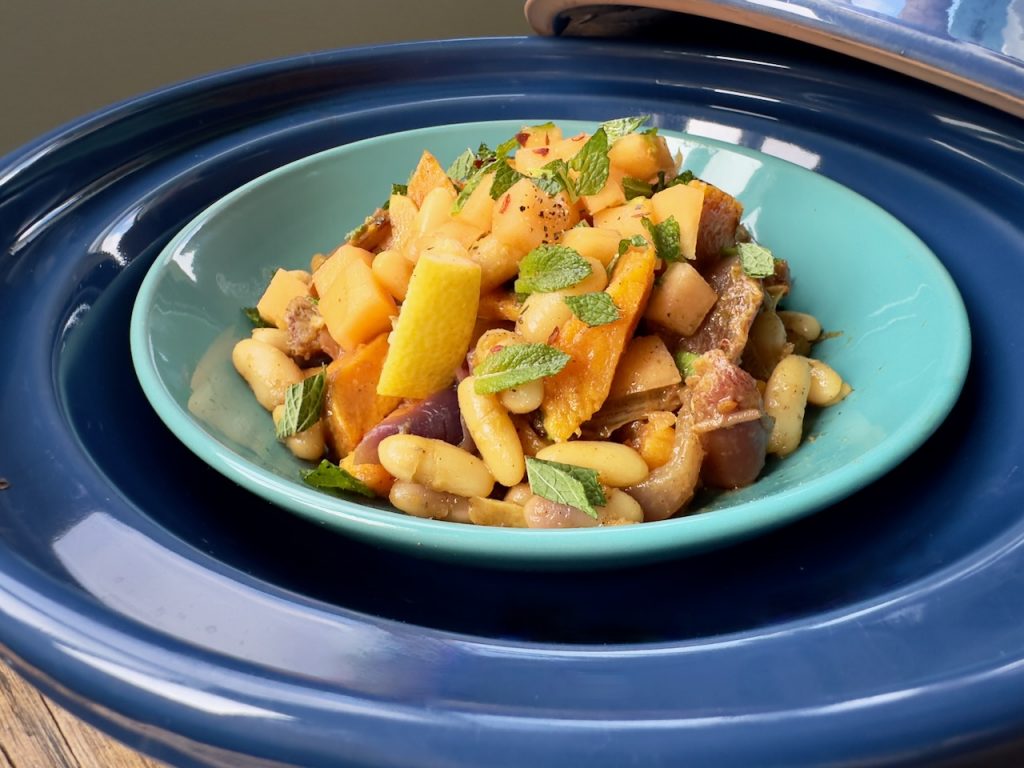
This warmly spiced Moroccan-style tagine is built on soft sweet potato, red onion and white beans, all gently simmered in a sauce of saffron, cinnamon, harissa, sumac and za’atar. It’s a plant-based one-pot with complexity and comfort in equal measure. You’ll learn to layer flavour, soften sweetness, and bring warmth without heaviness – perfect for slow, thoughtful evenings.
Ingredients
- 400 ml boiling water
- 1 unit stock cube | use a gluten-free stock cube if required
- 1 pinch saffron threads
- 1 tbsp rapeseed oil
- 140 g red onion | unpeeled weight; peeled and sliced into petals
- 2 units fresh garlic cloves | peeled and sliced diagonally
- 18 g fresh ginger | grated
- ¼ tsp ground cinnamon
- ½ tbsp red wine vinegar
- ¼ tsp za'atar
- ¾ tsp sumac
- ¼ tsp harissa
- ¼ tsp salt
- 1 pinch chilli flakes
- 10 units dried dates | halved lengthways
- 10 units dried apricots | halved lengthways
- 400 g sweet potato | unpeeled weight; peeled and cut into largish chunks (about the length of a thumb and a bit thicker)
- 240 g cannellini beans | cooked weight
- 5 g fresh mint | roughly chopped
- 1 unit unwaxed lemon | wedge to serve, zest to dress
Instructions
- Pre-heat the oven to 180℃ Fan.
Prepare the 'saffron stock'
- Dissolve the stock cube into the boiling water. Heat a small fry pan on medium-low, and when it's warm drop the pinch of saffron threads into the pan for about a minute. You are toasting them. They will emit an aroma and darken slightly when done. Put them into the stock and stir so the stock changes colour.400 ml boiling water, 1 unit stock cube, 1 pinch saffron threads
Start to cook the onion, garlic and ginger
- In an ovenproof casserole dish that has a lid, heat the rapeseed oil gently on a medium heat. Add the onion petals and cook for a couple of minutes to soften and relax them. Then add the garlic and ginger and cook for a couple of minutes. Add the red wine vinegar to deglaze the pan.1 tbsp rapeseed oil, 140 g red onion, 2 units fresh garlic cloves, 18 g fresh ginger, ½ tbsp red wine vinegar
Add the spices
- Measure all the spices into a small bowl, mix together and then add the mixed spices to the onion, garlic and ginger. Stir carefully through.¼ tsp ground cinnamon, ¼ tsp za'atar, ¼ tsp harissa, ¼ tsp salt, 1 pinch chilli flakes, ¾ tsp sumac
Add the sweet potato and saffron stock
- Add the chunks of sweet potato, the chopped dried dates and the chopped dried apricots and stir to mix everything thoroughly.10 units dried dates, 400 g sweet potato, 10 units dried apricots
- Add the saffron stock, mix quickly, put the lid on and put into the pre-heated oven for 20 minutes. After 20 minutes, get the casserole out of the oven and prod the sweet potato with a sharp knife. Depending on how large the pieces of sweet potato are, you might be nearly done with oven time. At this point, tip the cannellini beans into the casserole, mix around and put the casserole back into the oven for a few minutes to heat the beans through. You'll probably need 10 more minutes in the oven.240 g cannellini beans, 5 g fresh mint
- Chop the mint and scatter on top of the dish to serve. Serving with lemon zest on top is perfect, along with a slender lemon wedge. My test diner loved the fresh lemon flavour atop this dish!
Nutrition
Calories: 362kcalCarbohydrates: 68gProtein: 11gFat: 7gSaturated Fat: 1gPolyunsaturated Fat: 5gMonounsaturated Fat: 1gCholesterol: 0.02mgSodium: 797mgPotassium: 840mgFiber: 14gSugar: 12gVitamin A: 28507IUVitamin C: 12mgCalcium: 163mgIron: 4mg
Nutritional values are estimates only and will vary depending on specific ingredients used. Nutrition is per serving. Information is for the main recipe, not optional accompaniments.
COPYRIGHT
© The Golden Polar Bear, 2026. Recipe and photography by Julia Savory. If you share it, please link back to thegoldenpolarbear.com.
Next Steps?
You’ve got the full recipe — now take it further. Inside Black Labrador, you’ll find structured video courses and an ever-growing cookbook designed to help you cook with understanding, not guesswork. Learn, revisit, and deepen your skills at your own pace.
‘Totally recommend the cookery course. The meals are really tasty and full of flavour (not like most of the vegan mush I make for myself).’
Kerry B, Cumbria